Dumpster rental in New York City means getting a roll-off container dropped on your street, driveway, or job site, filling it on your own schedule, and having it hauled to the transfer station when you're done. We handle placement on tight blocks in Astoria, Park Slope, and Bushwick, explain the DSNY street-permit rules by borough before you book, and give you the real total up front — not a teaser that jumps at the scale.
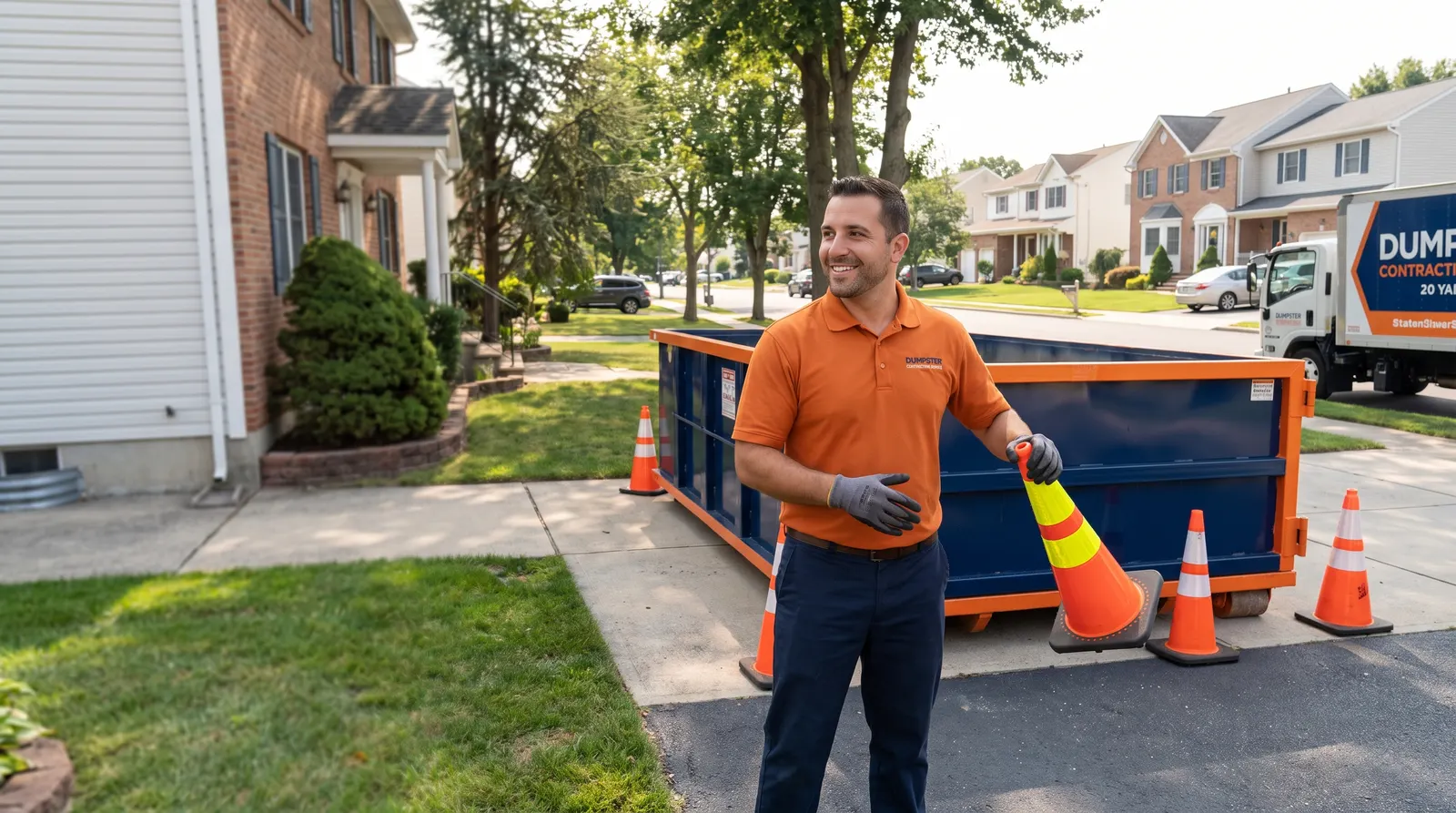
Roll-off dumpsters come in five common sizes. Match the container to your debris type and volume — or call and we'll size it for you in a minute.
| Size | Dimensions (L×W×H) | Holds about | Weight limit | Best for |
|---|---|---|---|---|
| 10 yard | 14' × 8' × 3.5' | ~3 pickup loads | 2–3 tons | Small cleanouts, concrete & dirt, single-room remodels |
| 15 yard | 16' × 8' × 4.5' | ~4–5 pickup loads | 2–3 tons | Flooring or roof tear-off, garage & basement cleanouts |
| 20 yard | 22' × 8' × 4.5' | ~6 pickup loads | 3 tons | Whole-home cleanouts, large remodels, deck removal |
| 30 yard | 22' × 8' × 6' | ~9 pickup loads | 4 tons | New construction, major renovations, commercial jobs |
| 40 yard | 22' × 8' × 8' | ~12 pickup loads | 5–6 tons | Large commercial, demolition, high-volume debris |
Dimensions and weight limits are typical roll-off specs and can vary by container. Not sure which to pick? A New York City rep will recommend the right size on a quick call.
From driveway roll-offs for a weekend cleanout to commercial containers for a job site — the right dumpster for every New York City project.
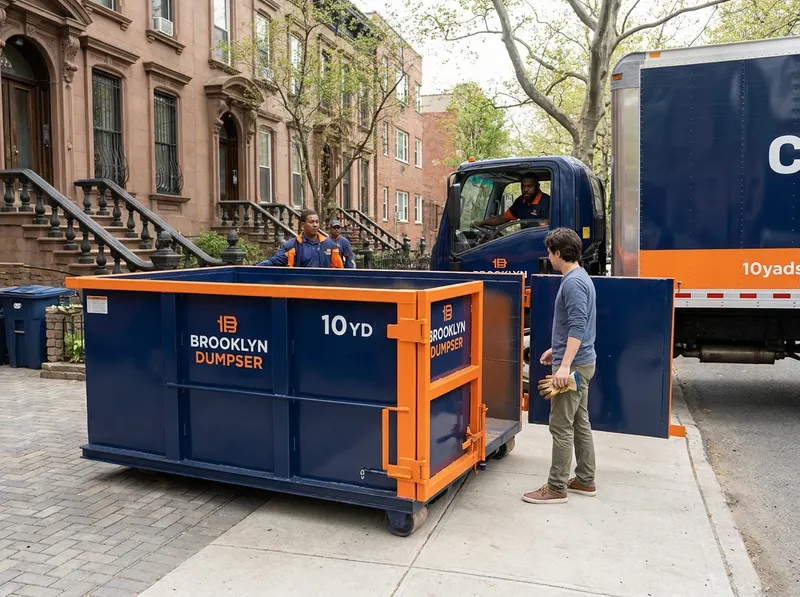
The 10-yard is the small-footprint roll-off for a bathroom remodel, a single-room cleanout, or a tight job in Forest Hills where there's no driveway to spare. It holds about three pickup-truck loads and sits low, which matters when the material is heavy — concrete, tile, dirt — because you hit the weight allowance before the box looks full. This is the one we recommend most on narrow blocks where a bigger container simply won't fit the curb, and it's the easiest size to place with a short DSNY permit on a residential street. If you're not sure whether your pile needs a 10 or a 20, text us a photo and we'll size it so you don't pay for a swap-out you didn't need.
Learn more →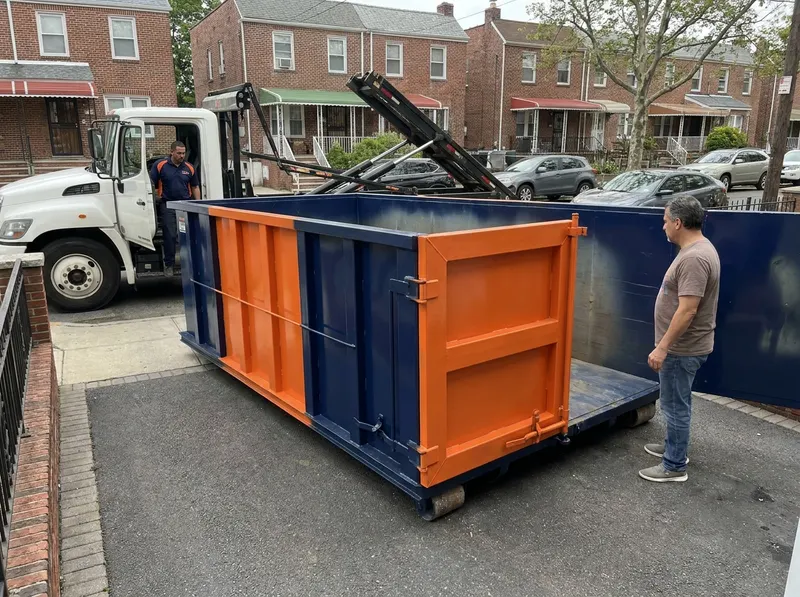
The 20-yard is the everyday renovation container — a kitchen gut, a full apartment cleanout, a mid-size flooring or deck job. It carries roughly six pickup loads and still fits most driveways and many street placements across Astoria and Williamsburg. Choose it when you've got real volume but want to keep the footprint reasonable and the weight allowance workable for mixed debris. It's the size that balances capacity against how much of a tight NYC block you can actually give up, which is why it's the most-booked container we run. For a whole-apartment renovation it usually saves a swap over the 10-yard while still fitting where a 30 wouldn't.
Learn more →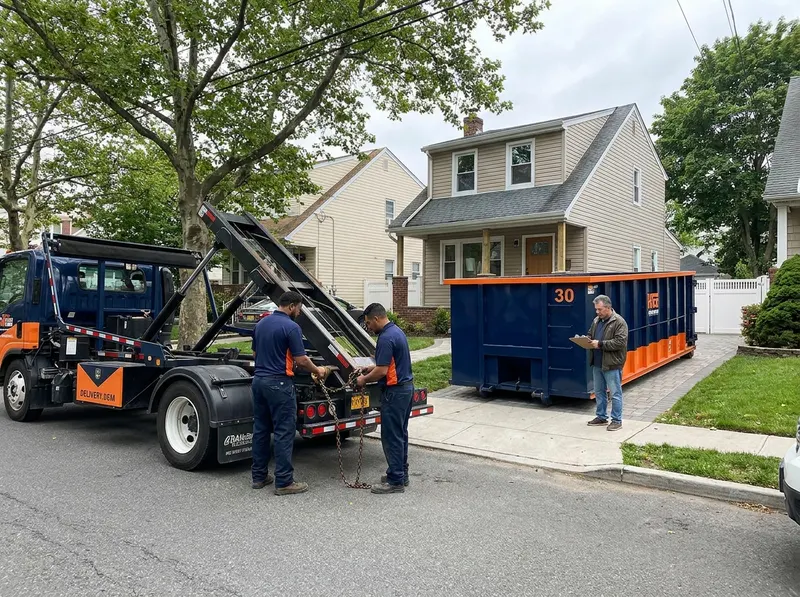
The 30-yard handles roof tear-offs, whole-home renovations, and larger commercial cleanups where the debris is bulky but not all dense. It's about nine pickup loads and needs a proper stretch of driveway or a permitted street span, so it's a better fit for Riverdale and outer-borough lots than a cramped Harlem side street. Ask us to confirm the placement before you commit to this size — the box is tall and long enough that the truck needs room both to set it and to hook it back up. When the job is a full-house gut producing framing, drywall, and cabinetry, the 30 keeps you from a mid-project swap that stalls the crew.
Learn more →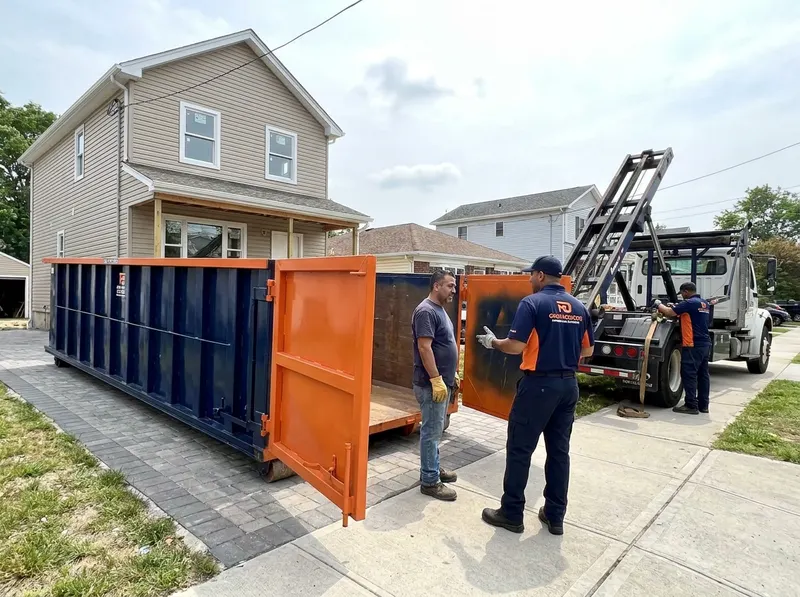
The 40-yard is the largest roll-off we run, built for major demolition, framing and siding, and big commercial jobs producing light, high-volume debris. It's roughly twelve pickup loads. It demands the most room and a clear approach for the truck, so it works best on open sites, warehouse lots, and larger properties rather than dense residential blocks — we'll check the street and turning space first. Because the volume is huge but the material is usually light, the 40 is about footprint, not weight; if your debris is dense like concrete or dirt, a smaller box will hit its weight allowance long before it fills, and we'll steer you there instead.
Learn more →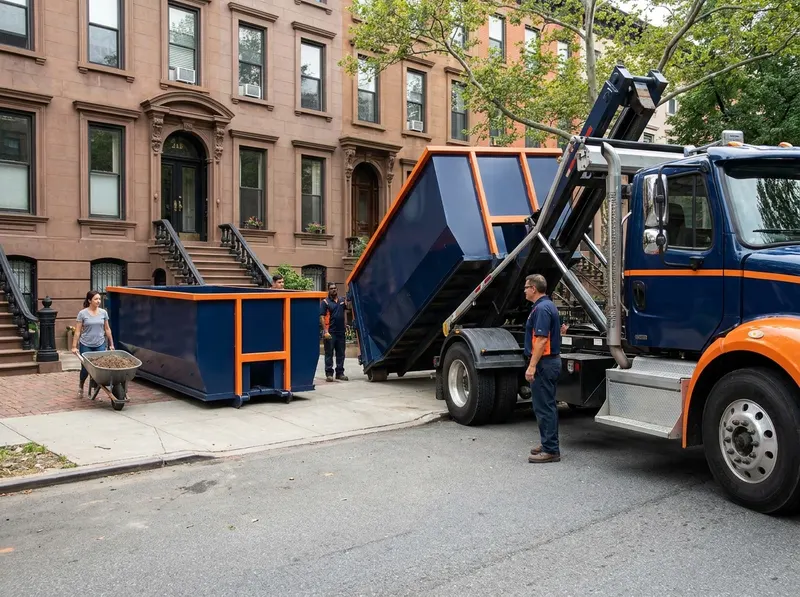
When demo debris is already blocking your access, same-day and next-day delivery is available across the five boroughs when the schedule allows. If you fill the box mid-project, we swap the full container for an empty one and haul the load so the crew never stops working. Text a photo of the pile and the placement spot and we'll confirm timing and the right size. Swap-outs matter most on active job sites where a stalled dumpster stalls the whole trade schedule — one call gets the full box gone and an empty one in the same footprint, no re-permitting the spot.
Learn more →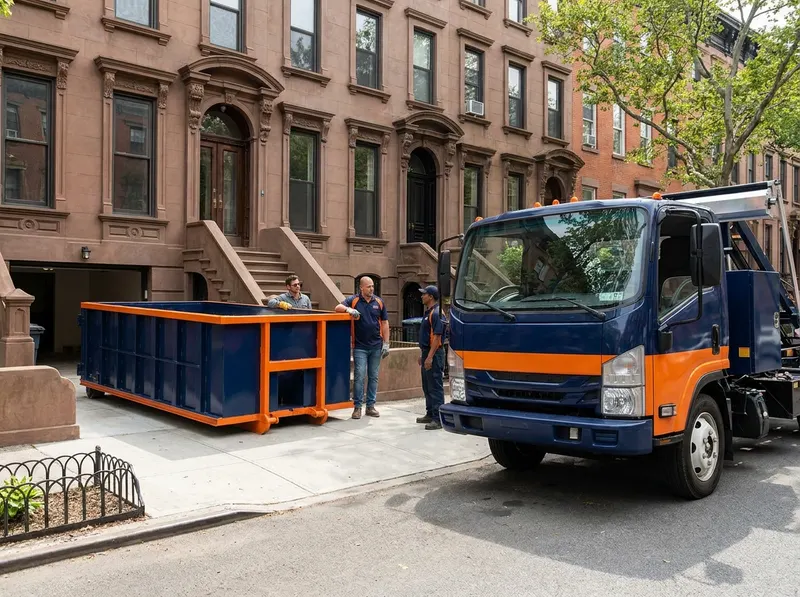
Dedicated roll-offs for construction and demolition debris — concrete, brick, wood, drywall, roofing, and mixed C&D. These carry a stated weight allowance so contractors know the ton limit and the total before they fill. We route heavy loads to the correct transfer station and keep the paperwork clean for job-site accounts. Because dense material like broken concrete and roofing tear-off adds up by weight fast, we'll usually recommend a 10- or 20-yard for clean-fill and mixed C&D even when the pile looks like it needs more — you fill by ton, not by the top rail.
Learn more →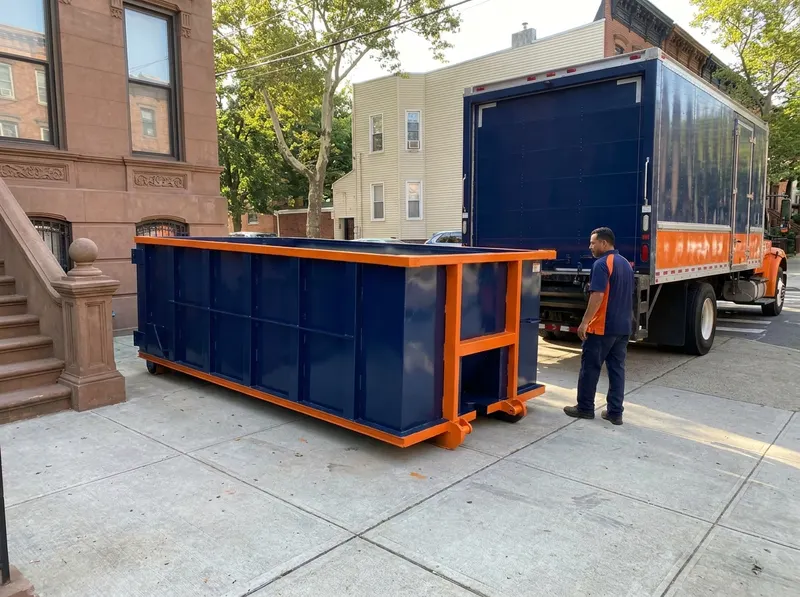
Roll-offs sized for home and garage cleanouts, estate clear-outs, and de-cluttering before a move or sale. A 10- or 20-yard usually covers a house, and we place it where you can carry to it without dragging junk down the block. This is the straightforward option when city pickup won't take the volume — DSNY bulk limits stop well short of a full cleanout. Tell us how many rooms and whether it's furniture-and-boxes or heavy old flooring and appliances, and we'll match the size to the load and the parking in front of your place.
Learn more →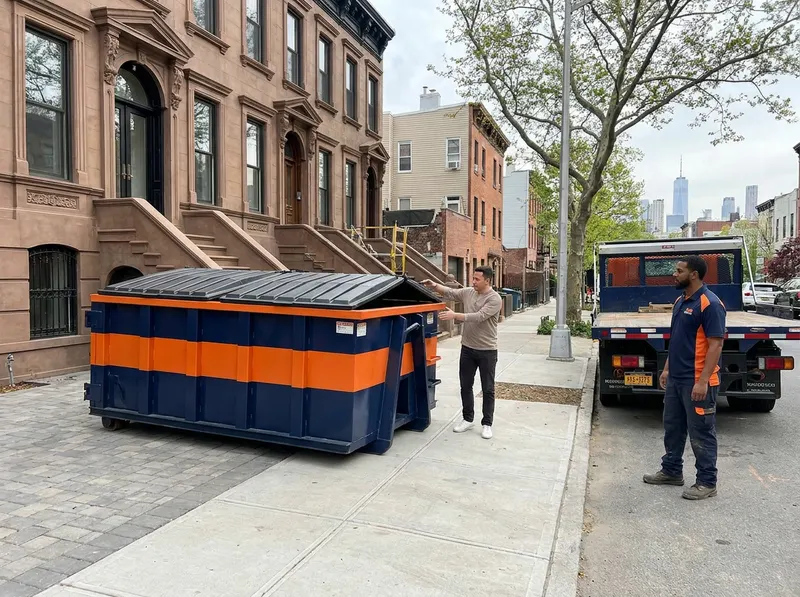
Recurring and on-call dumpster service for property managers, building supers, and commercial cleanups across NYC. We coordinate delivery windows around tenant access and street rules, and set up standing terms so a super can call once and get the same reliable placement each time. Weekly and long-term rental terms are available. For managers running turnover on multiple buildings, we keep the placement spots and permit needs on file by address so each drop lands the same way it did last time, without re-explaining the block.
Learn more →Driveway-friendly roll-off containers delivered and picked up on your schedule.
Learn more →Job-site and property-management containers with flexible swap-outs and net-terms billing.
Learn more →Flat-rate pricing includes delivery, pickup, and disposal up to the weight limit. You get a firm quote before we deliver — no hidden fees.
| Container | Typical price range |
|---|---|
| On-site minimum charge (any single pickup) | from $550 |
| 10 Yard dumpster — same-day delivery | $595–$775 |
| 20 Yard dumpster | $650–$900 |
| 30 Yard dumpster | $750–$1,050 |
| 40 Yard dumpster | $850–$1,250 |
| Construction & C&D dumpster (mixed debris) | quoted with ton limit |
| Residential cleanout dumpster | $595–$900 |
| Same-day / next-day delivery add | included in quote |
| Container swap-out (empty & return) | $550–$850 |
| Extended / long-term weekly rental | quoted per term |
| DSNY street-placement permit (borough-dependent) | varies — we explain before booking |
| Overweight / extra tonnage over allowance | per-ton, stated in quote |
Final price depends on debris type, rental length, and disposal weight in New York City, NY. Call for an exact, all-in quote.
Dumpster Rental company in New York City is a local roll-off container service that delivers, swaps, and hauls away construction, cleanout, and renovation debris across all five boroughs.
Dumpster rental in New York City means getting a roll-off container dropped on your street, driveway, or job site, filling it on your own schedule, and having it hauled to the transfer station when you're done. We handle placement on tight blocks in Astoria, Park Slope, and Bushwick, explain the DSNY street-permit rules by borough before you book, and give you the real total up front — not a teaser that jumps at the scale. If you searched "dumpster rental near me" because demo debris is already blocking your stoop, this is the straight version: size, fit, permit, price.
One clear price — delivery, pickup, and disposal included. You'll know the cost of your New York City dumpster rental before we roll out, with no surprise tonnage bills.
Order today and in most of New York City your roll-off is on the driveway the same or next day — your project never waits on the dumpster.
Boards down before the container touches the ground, careful placement, and a clean pickup. We protect your driveway, lawn, and property.
Size is the whole decision, and it comes down to how much debris you make versus how much curb or driveway you can give up. If you want a container for a single bathroom remodel, a small garage cleanout, or a few rooms of old flooring, choose the 10-yard — it fits on a tight Sunnyside side street and holds roughly three pickup loads. If you're clearing a full apartment, doing a kitchen gut, or handling a mid-size Bay Ridge renovation, the 20-yard is the workhorse and carries about six pickup loads while still fitting most driveways. If you want to catch a roof tear-off, a whole-floor demo, or a heavy Park Slope brownstone gut, choose the 30-yard for volume and the 40-yard for the biggest light-debris jobs like siding and framing. The trade-off is real: the bigger the box, the more street space it eats and the more the haul and weight allowance cost, so oversizing for a small job wastes money while undersizing means a second swap-out. Heavy debris — concrete, brick, dirt, roofing — fills a small box fast by weight, so a 10- or 20-yard is often the right call even when the pile looks big; light, bulky junk like furniture and drywall is where the 30- and 40-yard earn their footprint. There's a second axis most people miss: access. A 40-yard needs a straight, clear approach for the truck to set it down and pick it up, which a one-way Bushwick block or a parked-solid Williamsburg street rarely gives you, so on a dense residential block the 20-yard is often the largest size that actually works even when the debris would justify more. Tell us the material, the block, and where the truck can pull in, and we'll point you to the container that fits all three.
New York City is five county-boroughs — New York (Manhattan), Kings (Brooklyn), Queens, Bronx, and Richmond (Staten Island) — and each handles a roll-off on the street differently, so the permit question isn't one answer, it's five. Placement is the real NYC problem: a container that drops fine in a Riverdale driveway can be a genuine headache on a parked-solid Park Slope block or a narrow Bushwick one-way, which is why we lead with the block, not the box. Manhattan curbs near Central Park, Grand Central Terminal, and the High Line come with the tightest street rules and the least parking, so a smaller container and a proper permit usually beat trying to force a big box onto the curb. Out in Queens — Astoria, Sunnyside, Flushing, Forest Hills — you're more likely to have a driveway or a wider side street, which opens up the 20- and sometimes 30-yard on private property without a street permit at all. Brooklyn splits the difference: brownstone blocks in Park Slope and dense stretches of Williamsburg and Bushwick are placement puzzles, while Bay Ridge often has more room to work with. City debris also travels — the old Fresh Kills landfill on Staten Island closed years back, so loads now run to active transfer stations, and the weight allowance in your quote reflects that hauling reality rather than a made-up flat rate. That's why two containers of the same size can quote differently: the material's weight and the transfer route matter as much as the box.
We deliver roll-off dumpsters throughout New York City — pick your area for local drop-off details.
Straight answers to the questions New York City customers ask before they book.
Same-day & next-day roll-off delivery across New York City & the surrounding area.
 Dumpster Contracting Service